Alexander Alberro
Modern and Contemporary Art; History of Photography
Ph.D., Northwestern, 1996
Biography
Alexander Alberro’s courses and graduate advising focus on modern and contemporary European, U.S., and Latin American art, as well as the history of photography and film. Recent lecture courses include “Histories of Photography,” “Early Modernism and the Crisis of Representation,” “In and Around Abstract Expressionism,” and “Contemporary Art and Globalization.” Graduate seminars taught include “South-South Constellations in Contemporary Art,” “The Infrastructure of Contemporary Art,” “Contemporary Caribbean Art,” “Photography and Camera Work”; “Spectatorship, Participation, and Interaction in Contemporary Art”; and “Abstract Art and its Legacies in South America.” He has recently directed or co-directed dissertations on contemporary art in localities such as Iran, Iraq, India, Japan, South Korea, Indonesia, Australia, Algeria, Nigeria, the Democratic Republic of Congo, Brazil, Argentina, Bolivia, Cuba, Ecuador, Peru, Germany, France, Canada, and the United States.
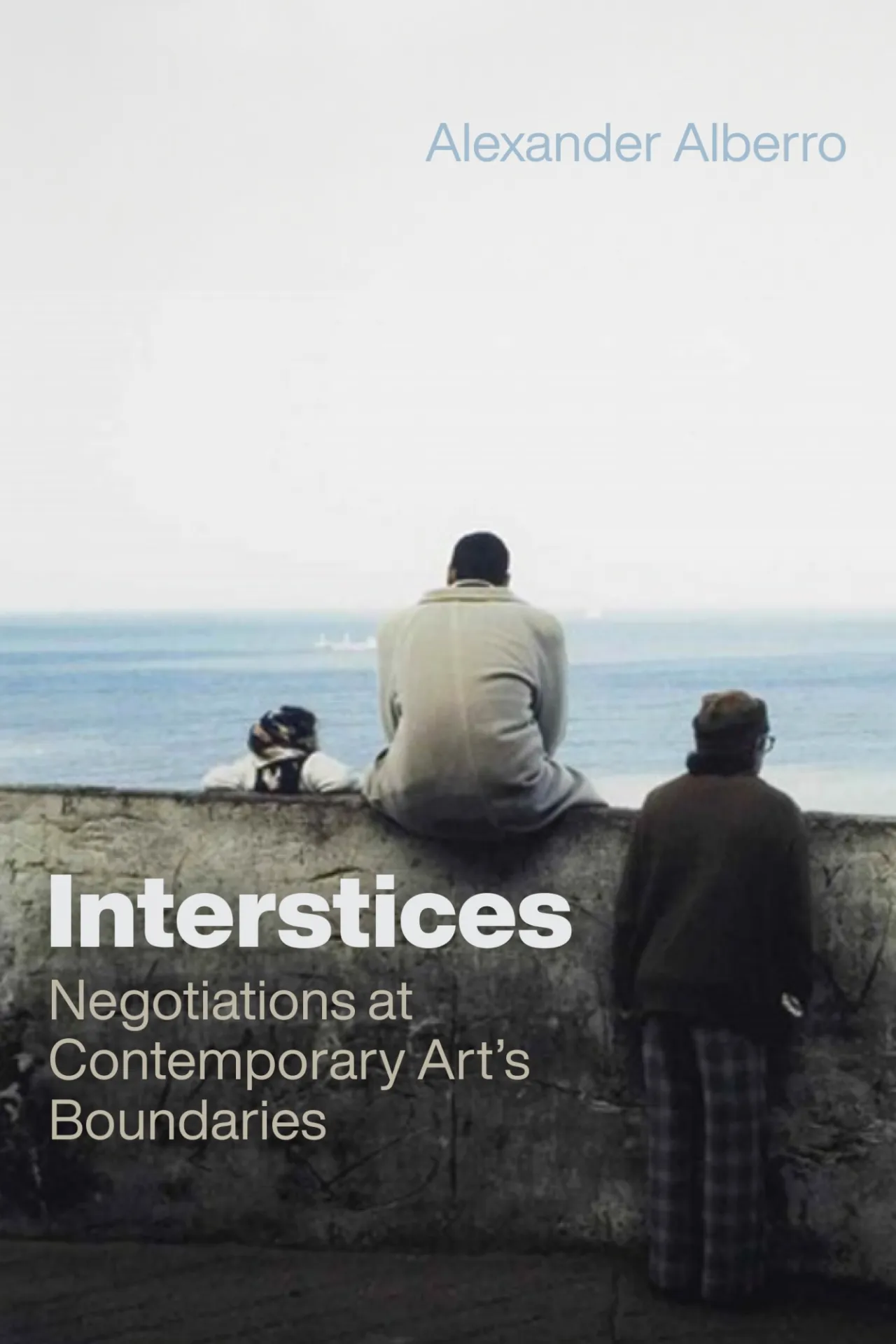
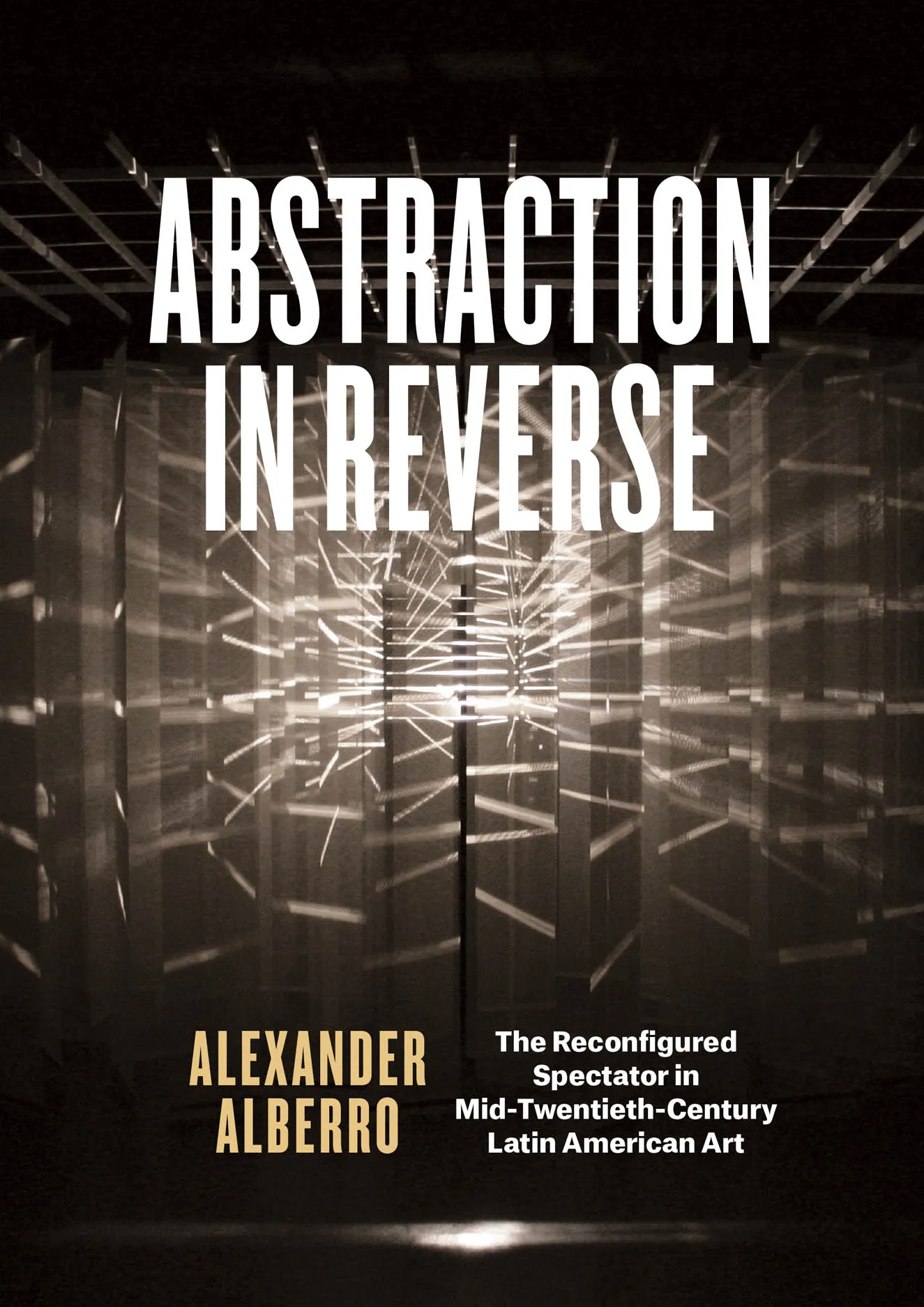
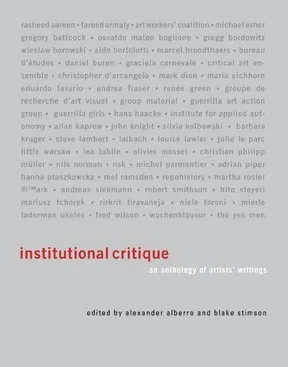
Professor Alberro’s writings have appeared in a broad range of journals and exhibition catalogs and have been translated into many languages. He is also the author and editor of numerous books, including Interstices: Negotiations at Contemporary Art’s Boundaries (2025), Abstraction in Reverse: The Reconfigured Spectator in Mid-Twentieth Century Latin American Art (2017), Working Conditions (2016), Luis Camnitzer In Conversation with Alexander Alberro (2014); What is Contemporary Art Today? (2012); John Miller: The Ruin of Exchange (2012); Institutional Critique: An Anthology of Artists’ Writings (2009); Art After Conceptual Art (2006); Museum Highlights (2005); Conceptual Art and the Politics of Publicity (2003); Recording Conceptual Art (2001); Two-Way Mirror Power (1999); and Conceptual Art: A Critical Anthology (1999). Professor Alberro is the founding editor of the University of California Press book series “Studies on Latin American and Latinx Art,” which commissions publications on art history and cultural practices emerging from Central and South America, the Caribbean, and the Latin American diaspora in the 20th and 21st centuries.
Professor Alberro has received research fellowships from the Howard Foundation, the National Endowment for the Humanities, the Whitney Museum of American Art in New York City, the Social Sciences and Research Council in Canada, and the Museum of Modern and Contemporary Art in Seoul.
Selected Publications
“Standards, Logical Events, and Art’s Substanceless Reality,” This is (Not) Conceptual Art, ed. Bae Myungji (Seoul: MMCA, 2026), 310-330.
“Renée Green’s Contrapuntal Compositions,” Renée Green: The Equator Has Moved, eds. Jordan Carter and Svetlana Kitto (New York: DIA Art Foundation, 2026), 83-93.
“Art’s Marvelous Ontology: Emilio Prini’s Exploration of the Real,” ...E Prini, ed. Luca Lo Pinto (Rome: MACRO, 2026), 120-125.
“Content, Context and Signification in the Work of Michael Asher,” Journal of Curatorial Studies, 13:2 (2025), 162-179.
"Artists, Critique, and the New York-Cologne Axis," in Entangled Histories, eds. Hilda van Gelder, Valérie Mavridorakis, Alexander Streitberger, and Erik Verhagen (Leuven University Press, 2025), 63-77.
“Doris Salcedo’s Art at the Nexus of Cultures,” Hermès, 95 (2025), 213-217.
“Ian Burn and the Aporias of Conceptual Art,” Australian and New Zealand Journal of Art, 24:2 (2024), 228-236.
“Project Exhibitions and the Twenty-first Century Art Museum,” MMCA Studies, 15 (2024), 140-169.
“A Better Lifeworld: History, Identity, and Difference in the Art of Ken Lum,” Ken Lum (Steidl, 2024), 145-160.
“Border as Method,” in Motion: Migrations. Proceedings of the 35th World Congress of Art History, ed. Claudia Mattos Avolese (Sao Paulo, Brazil: Comite International d'Histoire de I'Art, 2023), 137-153.
“Ch’ixi Epistemology and the Potosí Principle in the 21st Century,” Art Margins, 12:2 (June 2023), 18-30.
“Adrian Piper: In and Out of Conceptual Art,” in Charting Space: The Cartographies of Conceptual Art , ed. Elize Mazadiego (Manchester, UK: Manchester University Press, 2023), 44-55.
"What is Radical?" ArtMargins, 10:3 (October 2021), 10-12.
“Contemporary Art, Activism, and Symbolic Value,” Journal of Visual Culture (01/17/2021)
“François Morellet’s Concrete Art of the 1950s,” in François Morellet, ed. Béatrice Gross (New Haven, CT: Yale University Press, 2019), 38-45.
“'Like the Skin of A Whale': The Pluri-sensorial Art of Lygia Pape,” in Lygia Pape, ed. Olivier Renaud-Clément (New York, NY: Hauser & Wirth, 2018), 8-25.
“To Find, To Create, To Reveal: Torres-García and the Models of Invention in Mid-1940s Rio de la Plata,” Joaquín Torres-Garcia: The Arcadian Modern (Museum of Modern Art, 2015), 106-121.
“Media, Art, and Politics in the Work of Roberto Jacoby,” October, 153 (Summer 2015), 3-13.
“Alice Creischer, Andreas Siekmann, and Max Jorge Hinderer, The Potosí Principle, 2010,” Mousse, 45:4 (2014), 21-33.
“A Messier Coherence,” Modernism/modernity, 20:2 (April 2013), 371-381.
“Life Models,” Frieze, 148 (June/July/August 2012), 154-159.
“Murder, He Wrote,” John Miller: The Ruin of Exchange (JRP/Ringier, 2012), 11-19.
"The Joke of Painting," Texte zur Kunst, 82 (June 2011), 232-236, republished in David Hammons, ed. Kellie Jones (MIT Press, 2024), 125-130.
“Picturing Relations: Images, Texts and Social Engagement in the Work of Barbara Kruger,” Barbara Kruger (Rizzoli, 2010), 193-200.
“Institutions, Critique, and Institutional Critique,” Institutional Critique: An Anthology of Artists’ Writings (MIT Press, 2009), 2-19.
“Periodising Contemporary Art,” Crossing Cultures: Conflict, Migration, Convergence, Proceedings of the 32nd Congress of the International Committee for the History of Art, ed. Jaynie Anderson (Melbourne University Press, 2009), 961-965.
“Mimicry, Excess, Critique,” Museum Highlights: The Collected Writings of Andrea Fraser (MIT Press, 2005), xxi-xxxvii.
“Specters of Provenance: National Loans, the Königsplatz, and Maria Eichhorn’s `Politics of Restitution’,” Grey Room, 18 (Winter 2005), 65-81.
“Beauty Knows No Pain,” Art Journal, 63:2 (Summer 2004), 36-43.
“The Catalogue of Robert Smithson’s Library,” Robert Smithson, ed. Eugenie Tsai (University of California Press, 2004), 244-248.
“Meaning at the Margins: The Semiological Inversions of John Knight,” 870: John Knight (Storm King Art Center, 2002), 16-31.
“Unraveling the Seamless Totality: Christian Philipp Müller and the Reevaluation of Established Equations,” Grey Room, 6 (Spring 2002), 5-25.
“At the Threshold of Art as Information,”Recording Conceptual Art (University of California Press, 2001).
“The Fragment and the Flow: Sampling the Work of Renée Green,” Renée Green: Ombres i senyals, ed. Nuria Enguita (La Fundació Antoni Tápies, 2000), 20-43.
“Blind Ambition: Andreas Gursky’s Big Picture,” Artforum International, 39:5 (January 2001), 104-114.
“Reconsidering Conceptual Art, 1966-1977,” in Conceptual Art: A Critical Anthology (MIT Press, 1999), xvi-xxxvii.
“Demystifying the Image: The Film and Video Work of Rodney Graham,” in Rodney Graham: Cinema Music Video, ed. Yves Gevaert (Kunsthalle Wien, 1999), 13-29, 73-87.
“A Media Art: Conceptualism in Latin America in the 1960s,” in Rewriting Conceptual Art, eds. Michael Newman and Jon Bird (Reaktion Books, 1999), 140-151, 233-236.
“The Dialectics of Everyday Life: Martha Rosler and the Strategy of the Decoy,” Martha Rosler: Positions in the Life World, ed. Catherine De Zegher (MIT Press, 1998), 72-112.
"The Turn of the Screw: Daniel Buren, Dan Flavin, and the Sixth Guggenheim International Exhibition," October, 80 (Spring 1997), 57-84.