Subhashini Kaligotla
Art and Architecture of the Indian Subcontinent
M.F.A., Poetry, Columbia University, 2006
Ph.D., Columbia University, 2015
Biography
Subhashini Kaligotla is an art historian of ancient and medieval South Asia (early centuries BCE–1300 CE) and a specialist in the Deccan Plateau region of southern India. Her research and writing are devoted to the many dimensions of sacred architecture—Buddhist, Hindu, and Jaina—from the creative resources of its makers to the multisensorial experience of its receivers as well as its intellectual history. She also studies image reception and aesthetics in early India and the arts of death.
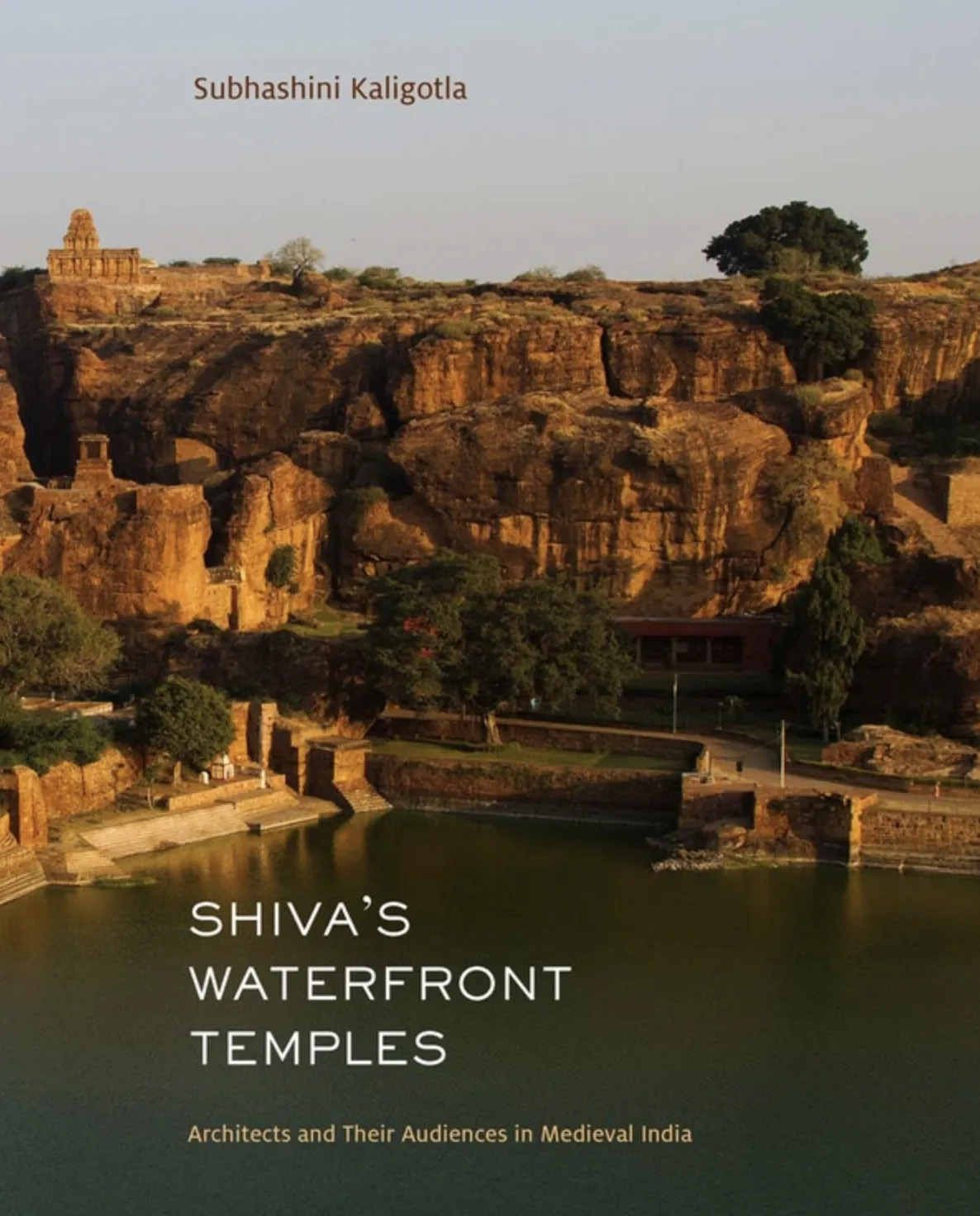
Kaligotla is author of Shiva’s Waterfront Temples: Architects and Their Audiences in Medieval India (2022), winner of the 2024 Alice Davis Hitchcock Book Award from the Society of Architectural Historians. The study revises both how we think of first-millennium stone architecture in South Asia writ large and how we position the Deccan region within the art-historical canon. It takes seriously the sensorial experience of period audiences, which included the women and men of court, monks, religious specialists, pilgrims, the gods for whom these fabulous constructions were fashioned, and the makers themselves.
Her current book project, Seeing Ghosts: Death and the Afterlife in the Art of Premodern India, narrates what can be termed the “biography of the dead,” from the moment of death to passage into the afterlife, by foregrounding art-historical materials. Under contract with Yale University Press, the project is concerned with mortuary rituals, mourning and commemoration, visual imaginaries of the cosmos, thought on immortality, and the self’s encounter with afterworld beings such as the god of death Yama. While continuing interests in architecture and sculpture, the research incorporates textiles, painting, memorial pillars and tablets, and other small-scale or vernacular media. Braiding religious and worldly perspectives as well as elite and popular practices, the research moves into new, largely unmapped terrain for the history of Indian art.
Before joining the faculty in Art History and Archaeology, Professor Kaligotla taught at Yale. Her teaching and advising traverse the subcontinent’s visual cultures: from ancient India to the modern and contemporary periods. She welcomes applications from students with interests in South Asian art of the ancient to early modern periods and those pursuing cross-cultural projects in which the subcontinent is a significant node.
A practicing poet and author of the poetry collections Bird of the Indian Subcontinent (2018) and My Life Closed Twice (2025), Kaligotla integrates poetry into her teaching and scholarly writing.
Selected Publications
Books
History of Art
Shiva’s Waterfront Temples: Architects and their Audiences in Medieval India (New Haven and London: Yale University Press, 2022).
Poetry
My Life Closed Twice (New Delhi: Copper Coin, 2025).
Bird of the Indian Subcontinent (Bangalore: (Great) Indian Poetry Collective, 2018).
Articles
“Pursuing Immortality, Pursuing the Arts of Death.” The Art Bulletin 107, no. 3 (September 2025): 8–38.
“Dasharatha’s Oil Vat in the Mewar Ramayana.” In The Routledge Companion to Literature and Art, edited by Neil Murphy, W. Michelle Wang, and Cheryl Julia Lee, 313–325. New York: Routledge, 2024.
“The Thing Itself: Images of Architecture and their Power in Early Deccan India.” RES: Anthropology and Aesthetics 75/76 (2021): 59–73.
“Words and Pictures: Rāmāyaṇa Traditions and the Art of Ekphrasis.” Religions 11, no. 7 (2020): 364. https://doi.org/10.3390/rel11070364.
“A Temple Without a Name: Deccan Architecture and the Canon for Sacred Indian Buildings.” In Canons and Values: Ancient to Modern, edited by Larry Silver and Kevin Terraciano, 92–113. Los Angeles: Getty Publications, 2019.
“Beyond Borderland: Claiming a Conceptual Space for Early Deccan Buildings.” Getty Research Journal, no. 8 (2016): 1–16. https://doi.org/10.1086/685912.