NB: because entrance to campus currently requires a Columbia ID, please reach out to Zachary Torres ([email protected]) by Monday, March 1 if you require guest access to this event. Due to campus restrictions we are unable to honor last-minute requests.
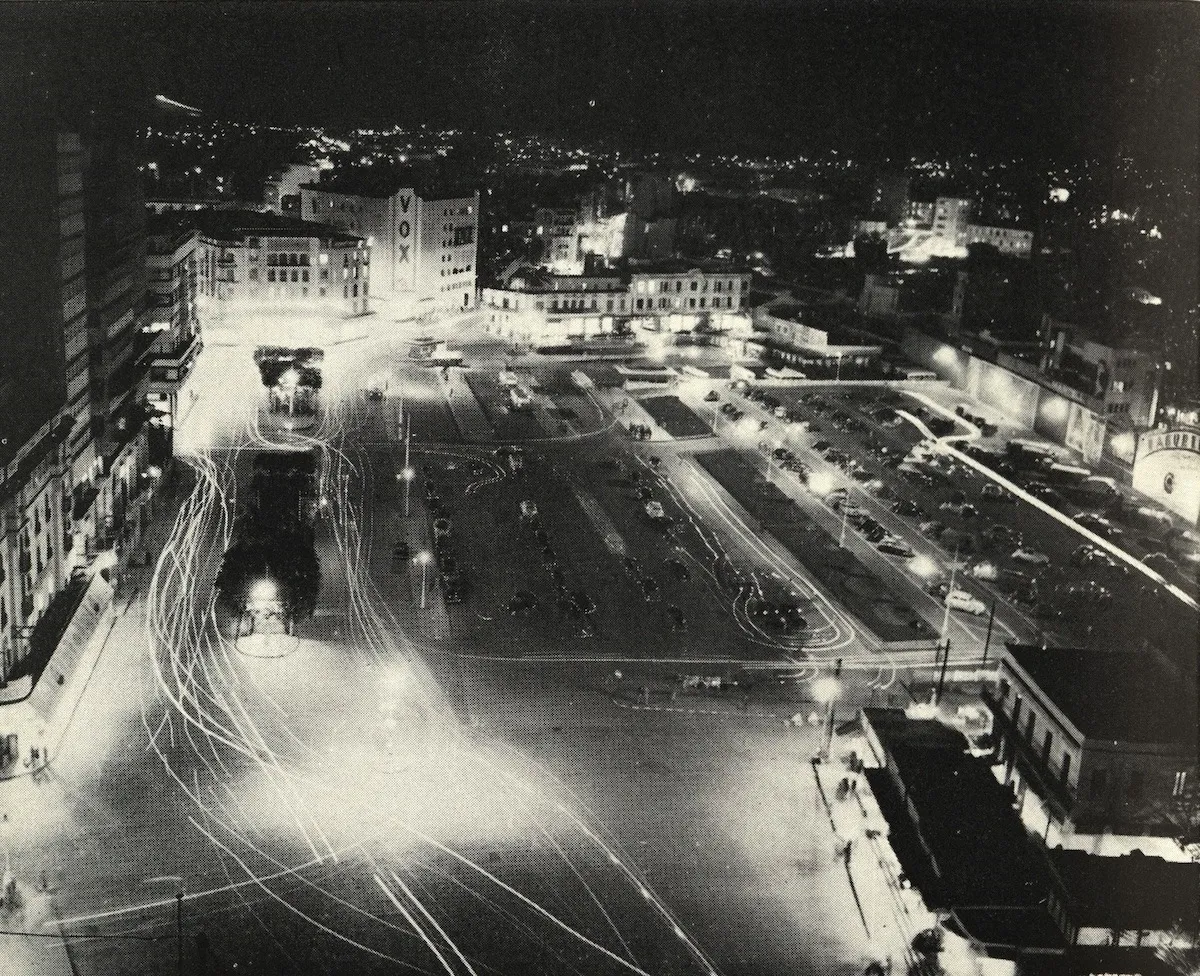
This talk examines the formation of screen architectures in Casablanca between the establishment of the French protectorate in 1912 and Moroccan Independence in 1956. The work is drawn from the forthcoming book, The Street and The Screen: Architectures of Spectatorship in the Age of Cinema, which examines the emergence and transformation of architectures designed for the exhibition of moving images in the first half of the twentieth century through a transnational lens. Modern screen environments, the talk argues, cannot be adequately understood through the terms we most often use to interpret them, that is, as entities generated by interaction of projectors, screens, audiences, and darkness. As an architecture problem, the design of screen spaces was intimately connected to the parallel problems of controlling the movement of celluloid reels and controlling the volatile mobility of spectators. Elaborating a concept of “discrepant circulation,” this talk examines plans, photographs, police files, films, and newspaper reports to reconstruct the urban and media dynamics whose interactions informed the city’s changing screen architectures in the era of colonial rule.
Craig Buckley is an Associate Professor in the Department of the History of Art at Yale University. A historian of modern architecture and its intersections with the visual arts and media, he is the author of Graphic Assembly: Montage, Media and Experimental Architecture in the 1960s, (University of Minnesota Press, 2019). His essays have appeared in the journals Grey Room, October, Log, Perspecta, and Texte zur Kunst, among others. He is also the editor of numerous collections, including Screen Genealogies: From Optical Device to Environmental Medium, (with Francesco Casetti and Rüdiger Campe) (University of Amsterdam Press, 2019); After the Manifesto: Writing, Architecture, and Media in a New Century (Columbia Graduate School of Architecture Books, 2014); and Clip/Stamp/Fold: The Radical Architecture of Little Magazines, (co-edited with Beatriz Colomina), (ACTAR Press, 2010). He is currently at work on The Street and the Screen: Architectures of Spectatorship in the Age of Cinema, a transnational media genealogy of the architectures of the moving image in the first half of the twentieth century.